
1. The Clairvoyant Mother & Albert Carter's Invention
The story of the Magic 8 Ball begins not in a corporate boardroom, but in the spiritualism movement of the 1930s and 1940s. In Cincinnati, Ohio, a woman named Mary Carter worked as a well-known clairvoyant and medium. During sessions, Mary used a slate tablet enclosed in a case: clients would ask questions, and mysterious spirit writing would appear on the slate.
Her son, Albert C. Carter, was fascinated by the psychology and mechanics of divination. Rather than relying on stage magic or spiritualist illusions, Carter set out to build a mechanical device that could simulate the mystery of clairvoyant guidance in an objective, repeatable way.
In 1944, Carter filed an application with the United States Patent and Trademark Office for a "Liquid Filled Dice Agitator" (awarded posthumously in 1948 as US Patent 2,452,730). The original design featured a cylindrical capsule divided into two liquid-filled chambers, each containing a floating die that would surface to reveal answers through glass viewports on opposite ends.
2. The Formation of Alabe Crafts: Albert & Abe
Carter needed a commercial manufacturing partner to bring his invention to market. He turned to Max Levinson, who introduced him to Abe Bookman, a graduate of the Ohio Mechanics Institute who ran a successful store fixture and display business.
In 1946, the partners established Alabe Crafts in Cincinnati. The company's name was a direct portmanteau of its two founders: Al (Albert) and Abe. Their first commercial offering was branded as "The Syco-Seer: The Miracle Home Fortune Teller". Packaged in an ornate cardboard cylinder, the product was marketed to adults as an entertaining party game.
Tragically, Albert C. Carter died in 1948 before seeing the device achieve widespread success. Bookman took over full operational control and streamlined the design into a single-chambered model called The Syco-Slate, replacing the dual chambers with a single, highly buoyant icosahedron die.
3. The 1950 Brunswick Billiards Contract: The 8-Ball Born
Although the Syco-Slate sold moderately well in novelty shops, its cylindrical exterior looked more like a thermos or pill container than an alluring magical oracle. The pivotal breakthrough came in 1950 through an unexpected corporate request.
The Brunswick Bowling & Billiards Corporation of Chicago was looking for a distinctive promotional novelty to give away to customers and pool hall proprietors. Brunswick approached Alabe Crafts with an idea: could Bookman fit the liquid divination mechanism inside a replica of a classic black number 8 pool ball?
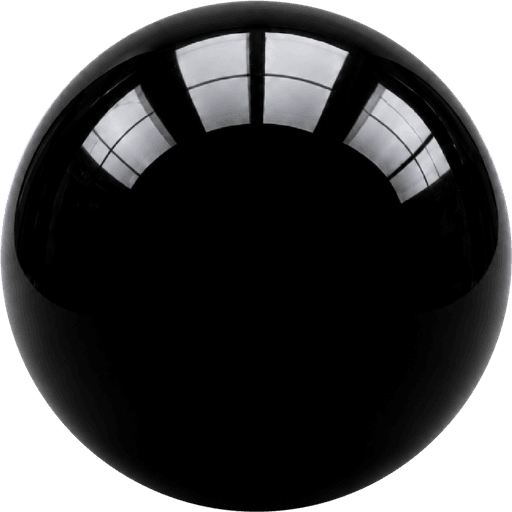
Bookman redesigned the outer shell into a gleaming 4-inch black plastic sphere with an authentic white circle bearing the numeral "8" on top, and a flat glass viewing portal on the bottom. The promotional campaign was an instantaneous hit. Realizing that the billiard ball aesthetic made the product infinitely more compelling than a cylinder, Alabe Crafts discontinued the Syco-Slate and launched the Magic 8 Ball nationwide in 1950.
4. Acquisition by Ideal Toy, Tyco, and Mattel
Throughout the 1950s and 1960s, Alabe Crafts expanded distribution from adult novelty stores into general department stores and toy aisles. In 1971, Abe Bookman sold Alabe Crafts to the Ideal Toy Company, which broadened global retail placement.
Over the following decades, corporate ownership shifted through industry consolidations: View-Master Ideal merged with Tyco Toys in 1989, and in 1997, Mattel acquired Tyco Toys. Under Mattel, the Magic 8 Ball received major promotional tie-ins, featuring in blockbuster films like Toy Story, iconic television episodes of Seinfeld and Friends, and custom corporate editions.
To this day, Mattel continues to manufacture the classic analog toy, selling an estimated one million units annually more than seven decades after its debut.
How the Internal Mechanics Function
Despite its mystical exterior, the interior of every Magic 8 Ball is an elegant application of physics and fluid dynamics:
- The Sealed Cylinder: Inside the hollow sphere sits an airtight capsule filled with water, alcohol (which prevents freezing and mold growth), and dark blue dye.
- The 20-Sided Icosahedron: A hollow, buoyant die with 20 triangular faces floats freely in the fluid. Ten faces contain affirmative fortunes, five neutral, and five negative.
- Liquid Displacement: When inverted, the die floats upward against the clear glass window, squeezing out the dark fluid so the raised white characters become instantly legible.
Explore our detailed breakdown of how the internal cylinder works or review the full guide to all 20 answers and their probabilities.
Experience Modern Digital Oracles
Want to test Carter's oracle for a decision right now? Try our Yes or No Magic 8 Ball, create custom dilemmas with our Decision Maker, or visit the interactive homepage oracle.
Frequently Asked Questions
When was the Magic 8 Ball invented?
The original patent was filed in 1944 by Albert C. Carter, and the iconic billiard 8-ball design was introduced in 1950.
What does 'Alabe Crafts' stand for?
'Alabe' is a combination of the first names of founders Albert C. Carter and Abe Bookman ('Al' + 'Abe').
Was the Magic 8 Ball originally intended for pool halls?
Brunswick Billiards commissioned the ball shape as a promotional item for pool players and bars, which led to its permanent adoption.
Has the liquid inside changed over time?
The chemical formulation has been refined for safety and non-toxicity, but the core combination of water, alcohol, and blue dye remains identical.